
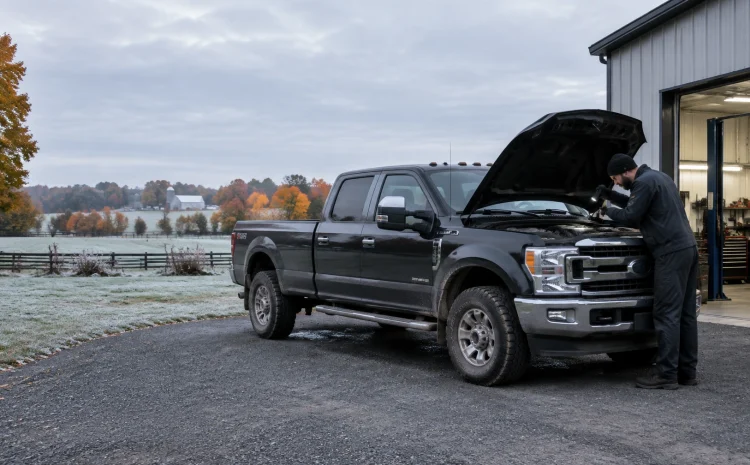
Diesel Truck Winter Prep: 7 Steps to Avoid Cold-Weather Breakdowns
September in Manheim, PA, still brings mild afternoons, but the first hard freeze in the Manheim area is only weeks away. That gives diesel pickup owners, farmers, fleet operators, and work-truck drivers a valuable window to prepare before cold weather exposes a weak battery, restricted fuel filter, or neglected cooling system.
Diesel engines are dependable, but they place greater demands on starting and fuel systems than gasoline engines. Whether you run a Powerstroke, Duramax, Cummins, Detroit, or Cat engine, a little diesel truck maintenance now can help prevent a no-start morning later.
Here are seven practical winter preparation steps we recommend for pickups, heavy-duty trucks, and tractors around Manheim and the surrounding communities.
1. Test the batteries and cold-cranking capacity
Cold weather reduces battery performance. A battery that starts your truck easily in September may not have enough strength to crank the engine when temperatures drop below freezing.
Many diesel pickups use two batteries, and both need to be tested. If one battery is weak, it can place additional strain on the other and cause slow cranking or a complete no-start condition.
Before winter, check:
- Battery age and condition
- Cold-cranking amp performance with a proper load test
- Corrosion around the terminals
- Battery cable tightness
- Engine and chassis ground connections
- Alternator charging voltage
- Battery hold-downs and case condition
Cleaning the terminals is helpful, but it does not replace a load test. Voltage can look normal while a battery still fails under the heavy demand of diesel starting.
Pay attention to how the engine sounds when you start it. Slow, dragging cranking is an early warning sign. Diesel engines need sufficient cranking speed to build compression heat and fuel pressure. If the starter turns too slowly, even a healthy fuel system may not get the engine running.
2. Check glow plugs and grid heaters
Glow plugs and grid heaters perform different jobs, but they have the same purpose: helping a diesel engine start in cold conditions.
Glow plugs heat individual combustion chambers. They are common on many Powerstroke and Duramax engines, as well as diesel tractors and other equipment. Cummins engines often use a grid heater in the intake system to warm incoming air before combustion.
A failed glow plug or grid-heater circuit may not cause an obvious problem during warm weather. The issue usually becomes clear on the first cold morning, when the engine cranks for an extended period, starts roughly, or produces white smoke.
A proper inspection should include:
- Glow plug operation and resistance
- Glow plug relay or control module function
- Grid-heater relay and electrical connections
- Intake heater operation
- Related fuses and wiring
- Cold-start performance
Do not assume that a warning light tells the full story. A diesel-specific scan and electrical test can confirm whether the system is operating as commanded. This is where professional diesel diagnostics can prevent unnecessary parts replacement.
3. Prevent fuel gelling before temperatures drop
Diesel fuel can begin to thicken in sustained cold weather. When fuel gels, it can restrict flow through the filter and prevent the engine from receiving the fuel it needs.
The best approach is prevention. As overnight temperatures begin to fall, use fuel from a station that has transitioned to an appropriate winter blend. If you operate a truck, tractor, or work vehicle in changing conditions, use a quality anti-gel treatment according to the product directions.
A few important rules:
- Add anti-gel before the fuel becomes cold or begins to gel.
- Use the correct treatment rate for the amount of fuel in the tank.
- Do not rely on an additive to repair contaminated or heavily gelled fuel.
- Keep the tank reasonably full to reduce condensation.
- Avoid mixing multiple fuel treatments unless they are confirmed compatible.
Fuel quality matters throughout the year, but winter makes existing contamination more troublesome. Water, debris, or microbial growth can restrict fuel flow and freeze inside the system.
If your truck develops hard starts, rough running, or unusual smoke after fueling, our guide to water in diesel fuel and filter separators explains what to watch for and how contamination is confirmed.
4. Service the fuel filter and water separator
A partially restricted fuel filter is a problem in any season. In winter, it can become the point where a truck stops running.
Old filters collect dirt, water, and other contaminants. Cold temperatures can make fuel flow more difficult, and any water inside the filter or separator may freeze. Modern high-pressure fuel systems are especially sensitive to clean, properly filtered fuel.
Before winter, replace the fuel filter or filters according to the manufacturer’s interval. If the truck works hard, operates in dusty conditions, or has experienced questionable fuel quality, an earlier service may be appropriate.
The water separator should also be drained and inspected. Do not ignore a water-in-fuel warning light. Water can damage injectors, contribute to corrosion, and create drivability problems that become worse in cold weather.
This is one area where following a routine matters. Our article on diesel fuel system mistakes and injector replacement covers why neglected filters and separators can lead to expensive fuel-system repairs.

5. Inspect the block heater and coolant condition
A block heater can make a major difference on very cold mornings, especially for a truck parked outside overnight. Do not wait until the first deep freeze to find out that the cord is damaged or the heater is not working.
Inspect the cord, plug, and connection for cracking, fraying, or heat damage. Test the heater early enough to have it repaired if necessary. Use the block heater according to the engine manufacturer’s guidance rather than leaving it plugged in continuously without need.
Coolant deserves the same attention. The cooling system must protect the engine against freezing while also allowing it to reach and maintain operating temperature.
A winter coolant inspection should include:
- Freeze-point testing with the correct equipment
- Coolant level and visible condition
- Signs of oil contamination or rust
- Hoses, clamps, and radiator condition
- Thermostat operation
- Water pump and belt condition
Weak coolant protection can lead to serious engine damage. A thermostat that stays open can also keep the engine running too cold, reducing heater performance and affecting fuel economy.
For tractors and heavy-duty equipment that may sit for long periods, check the coolant before storage and again before returning the machine to regular work.
6. Use the correct winter oil viscosity
Cold oil becomes thicker, which increases resistance during cranking and delays lubrication after startup. Choosing the correct winter viscosity can help the engine turn over more easily and receive oil where it is needed sooner.
Many diesel engines commonly use 15W-40 in moderate conditions, while a manufacturer-approved 5W-40 or 0W-40 synthetic oil may be better suited to colder temperatures. The correct choice depends on the engine, operating temperature, duty cycle, and manufacturer specifications.
Do not switch viscosity based solely on a general internet recommendation. Check the owner’s manual or service information for the required oil specification and emissions-system compatibility.
A pre-winter oil and filter change is also a good opportunity to look for warning signs, including:
- Fuel odor in the oil
- Rising oil level
- Coolant contamination
- Metallic particles
- Excessive sludge
- Unusual oil pressure
Fuel dilution and contaminated oil can cause damage long before a driver notices a major performance problem. If the engine is already hard-starting, smoking, or losing power, have the concern diagnosed rather than simply changing the oil and hoping it improves.
7. Check tires and air systems on work trucks
Winter traction starts with the tires. Check tread depth, sidewalls, valve stems, and inflation pressure before icy weather arrives. Tire pressure drops as temperatures fall, so inspect pressures when the tires are cold and adjust them to the vehicle or tire manufacturer’s specifications.
For work trucks and tractors, also consider the load and terrain. A truck towing equipment through rural roads around Manheim may need more careful attention to tread condition than a lightly loaded pickup used for short trips.
If your truck uses air brakes or other air-operated systems, moisture control is essential. Water in air tanks can freeze and restrict valves or brake components.
Inspect and service:
- Air-tank drainage
- Air dryer operation
- Desiccant condition
- Air lines and fittings
- Valves for leaks or freezing concerns
- Brake response and adjustment
Drain the tanks according to the vehicle manufacturer’s maintenance instructions. If you operate a heavy-duty truck regularly, do not treat the air system as an afterthought.
Get ahead of winter problems
Winter breakdowns often begin with issues that were already developing during warmer weather. A weak battery, restricted filter, failing glow plug, low coolant protection, or worn tire may only become obvious when the temperature drops.
A thorough inspection now gives you time to make informed repairs instead of dealing with a no-start truck before work. It also helps protect the fuel systems and engines used in Powerstroke, Duramax, Cummins, Detroit, and Cat applications.
If your diesel is already cranking slowly, starting hard, losing power, or showing warning lights, do not wait for the first freeze. Durastroke Mechanical provides diesel truck maintenance, diesel diagnostics, pickup and engine repairs, and major rebuild services for drivers, farmers, and work-truck operators in Manheim, PA and the surrounding communities. Contact Durastroke Mechanical to schedule a winter inspection or repair.